
Food Trust Series · 26 October 2026
Compliance Keeps You on the Shelf. Traceability Keeps You in the Basket.
Four lessons for Indian food brands as food safety enforcement tightens.
The carousel, as shared on social media
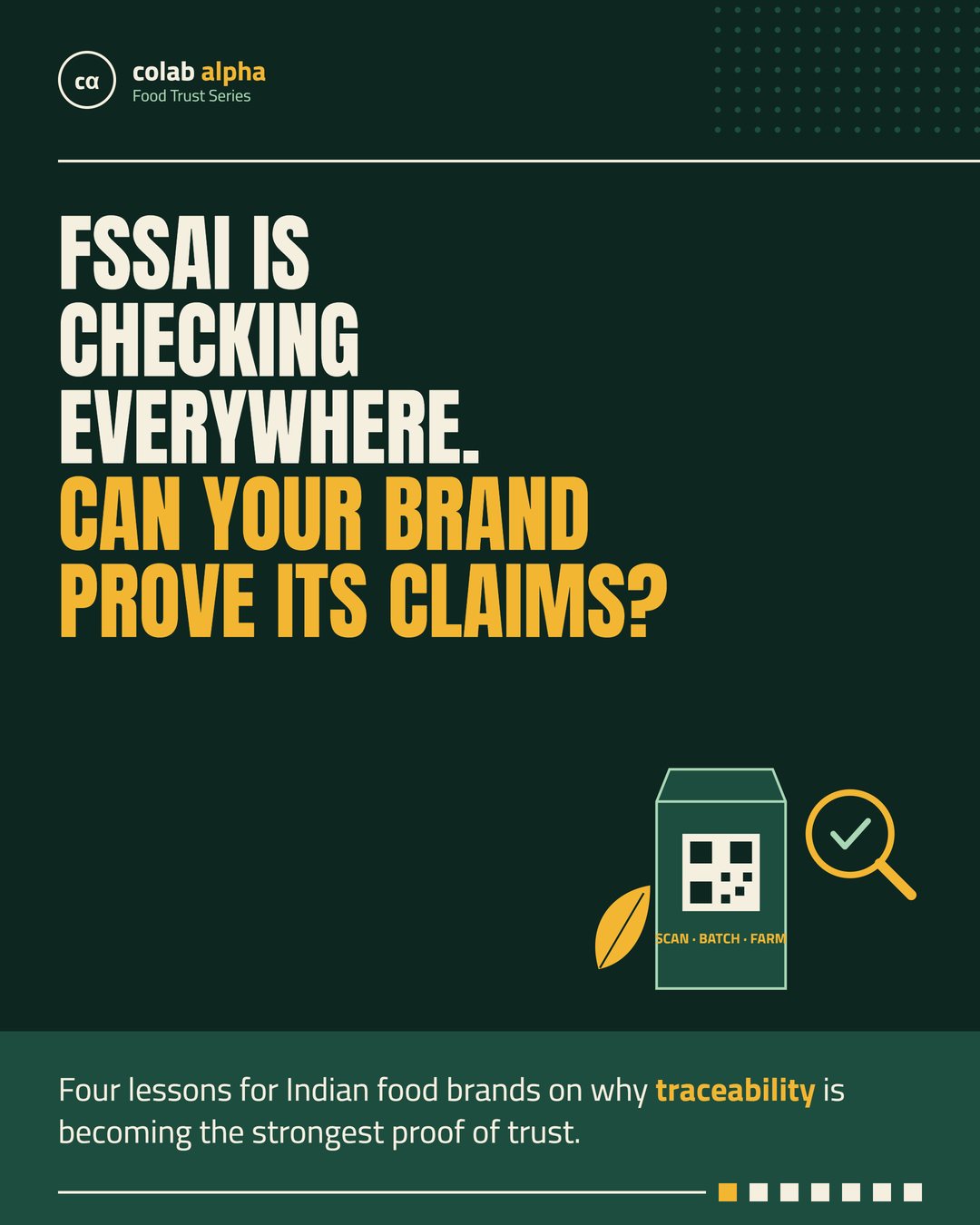
Swipe or scroll to see all 7 slides.
Walk into any kirana store or open any quick-commerce app and you’ll see the same words on almost every pack: pure, natural, farm-fresh, chemical-free. Indian shoppers have read them so often that they barely register anymore.
The regulator isn’t taking these words on trust either.
The reality check
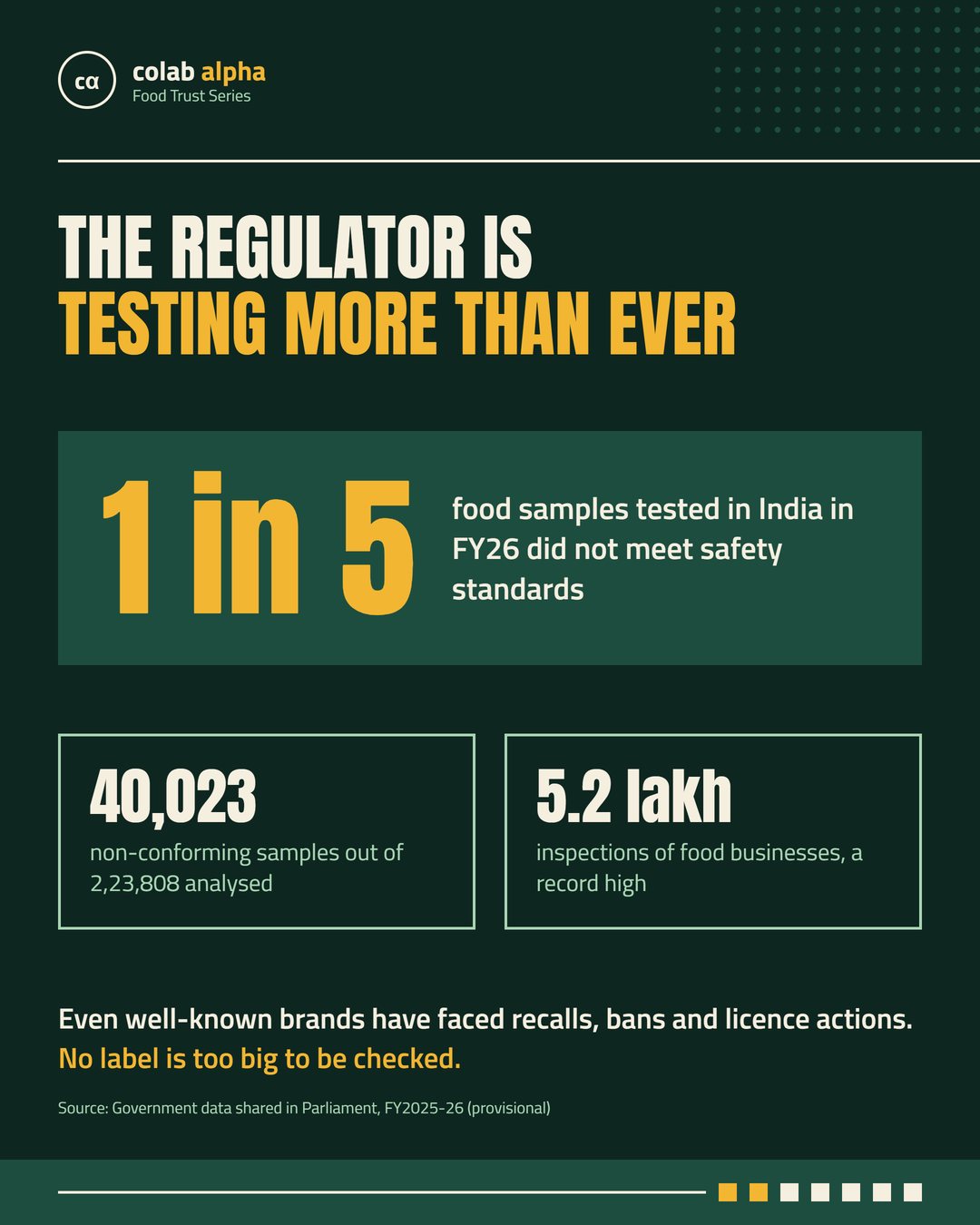
India’s food safety system is testing at a scale it has never reached before. In FY26, 40,023 of the 2,23,808 food samples tested did not meet safety standards, and the government carried out a record 5.2 lakh inspections of food businesses. Dairy looks even worse: more than one in three milk and milk product samples failed to meet the standards.
Large companies are not exempt. In Rajasthan, the food safety commissionerate acted against major brands for adulteration for the first time, including bans on some of their products. Just this month, FSSAI directed a well-known spice company to recall an entire batch of cumin powder after a sample was declared unsafe.
The takeaway is simple. A big name doesn’t protect you, and a single bad batch can undo years of brand building.
Why traceability is the opportunity
Most brands treat FSSAI as a box to tick. The ones pulling ahead treat proof as part of the product. When you can show where an ingredient came from, which batch it belongs to and what the lab found, you’re no longer asking buyers to trust you. You’re showing them.
A recent EIT Food Consumer Observatory report on consumer trust reached a similar conclusion. Food information builds trust when it is clear, easy to find and backed by credible sources. Here’s what that looks like in India.
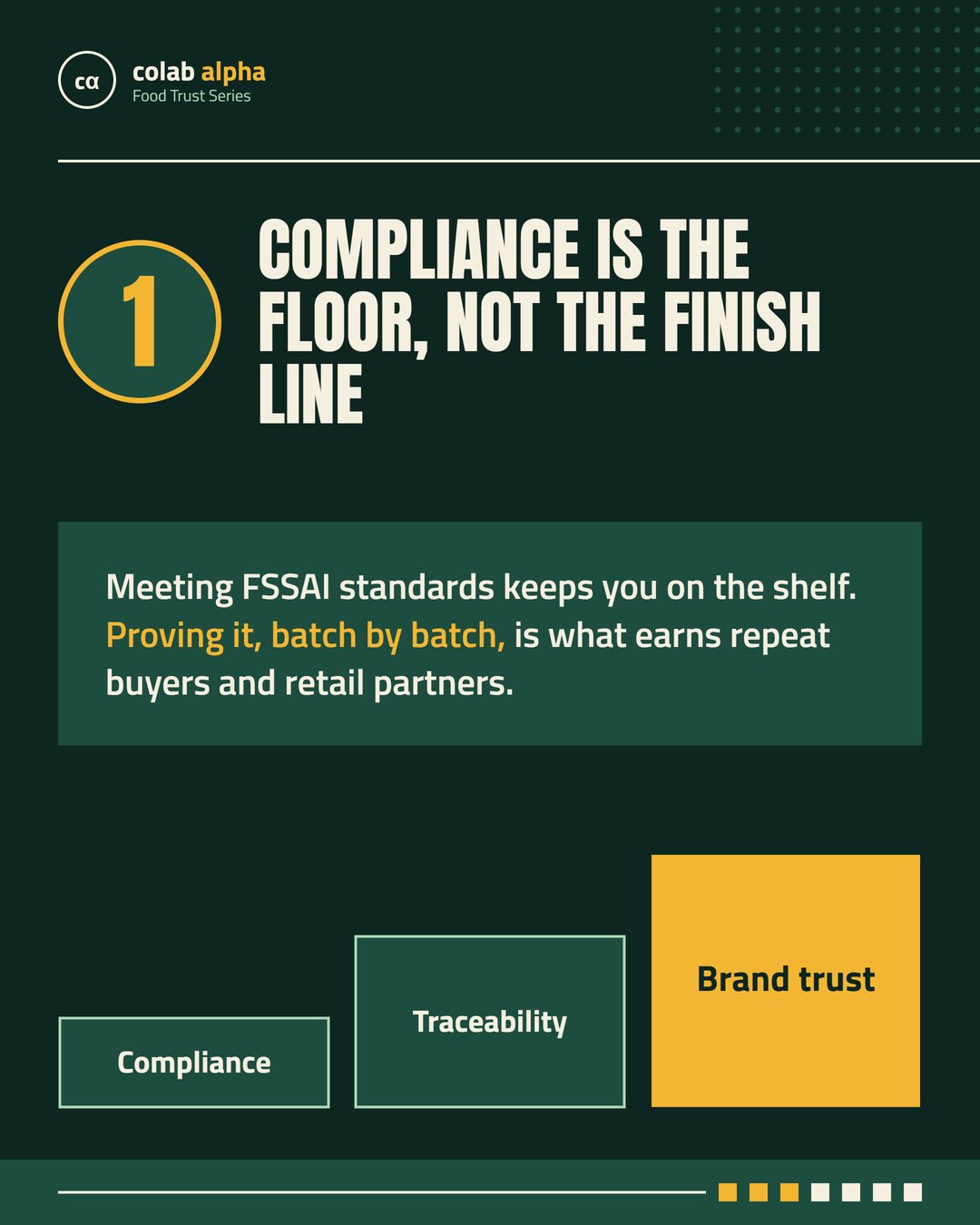
Lesson 1: Compliance is the floor, not the finish line
Meeting FSSAI standards keeps you in business. Proving it consistently, batch by batch, is what earns repeat customers, retail listings and export buyers.
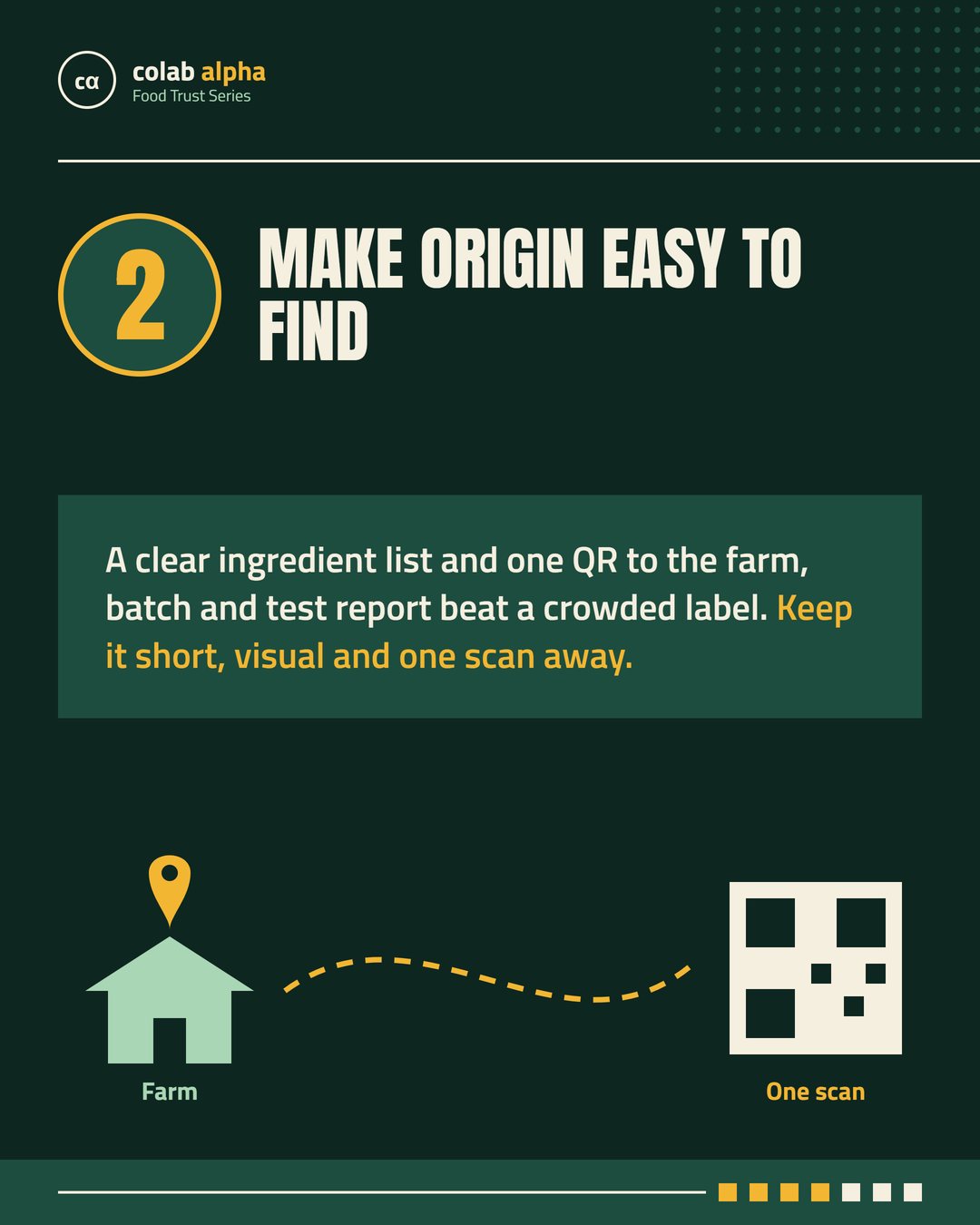
Lesson 2: Make origin easy to find
Shoppers value ingredient lists and origin details, but only when they can find and understand them quickly. A single QR code linking to the farm, batch and test report works better than a crowded label. Keep it short, visual and one scan away.
Lesson 3: Let credible third parties speak for you
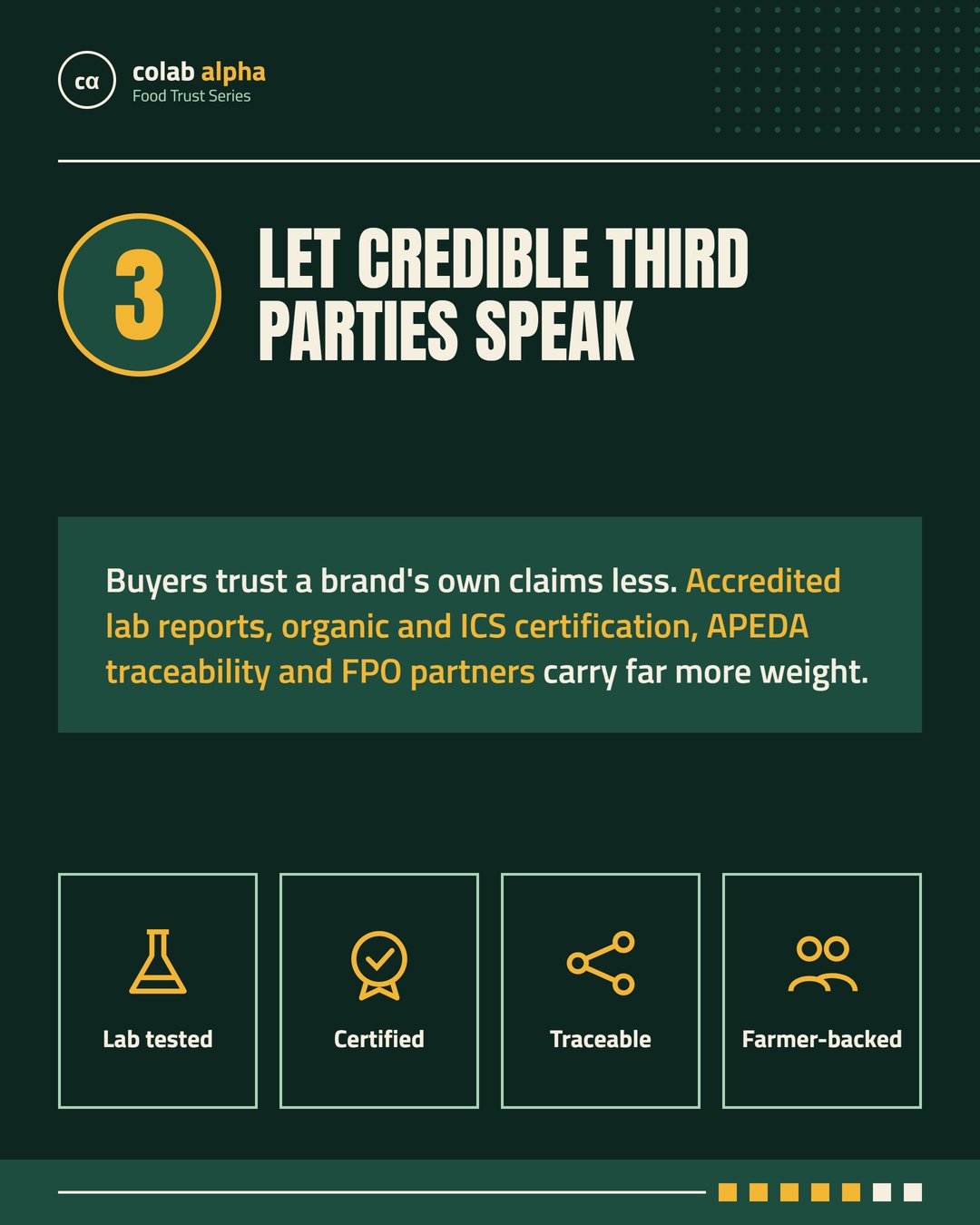
People trust what a brand says about itself less than what independent bodies say about it. Accredited lab reports, organic and ICS certification, APEDA traceability records and partnerships with FPOs carry far more weight than any tagline.
Lesson 4: Assume scepticism, not blind trust
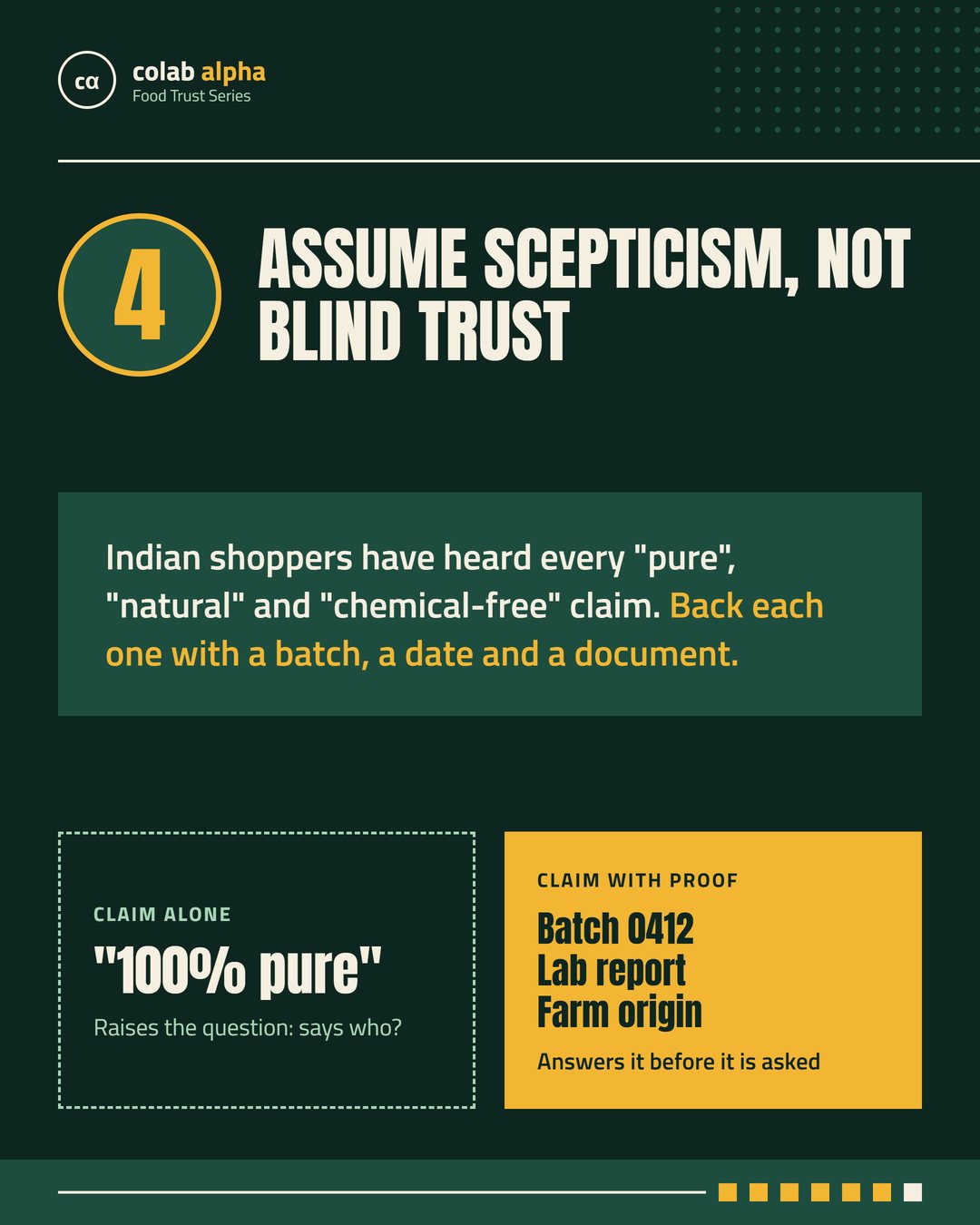
“100% pure” invites the question: says who? “Batch 0412, lab-tested, sourced from this farm cluster” answers it before anyone asks. Back every claim with a batch, a date and a document.
The bottom line
Stricter enforcement is going to stay. Brands that see traceability as a compliance burden will keep reacting to inspections. Brands that see it as a story will use it to win trust that competitors can’t easily copy.
How Colab Alpha can help
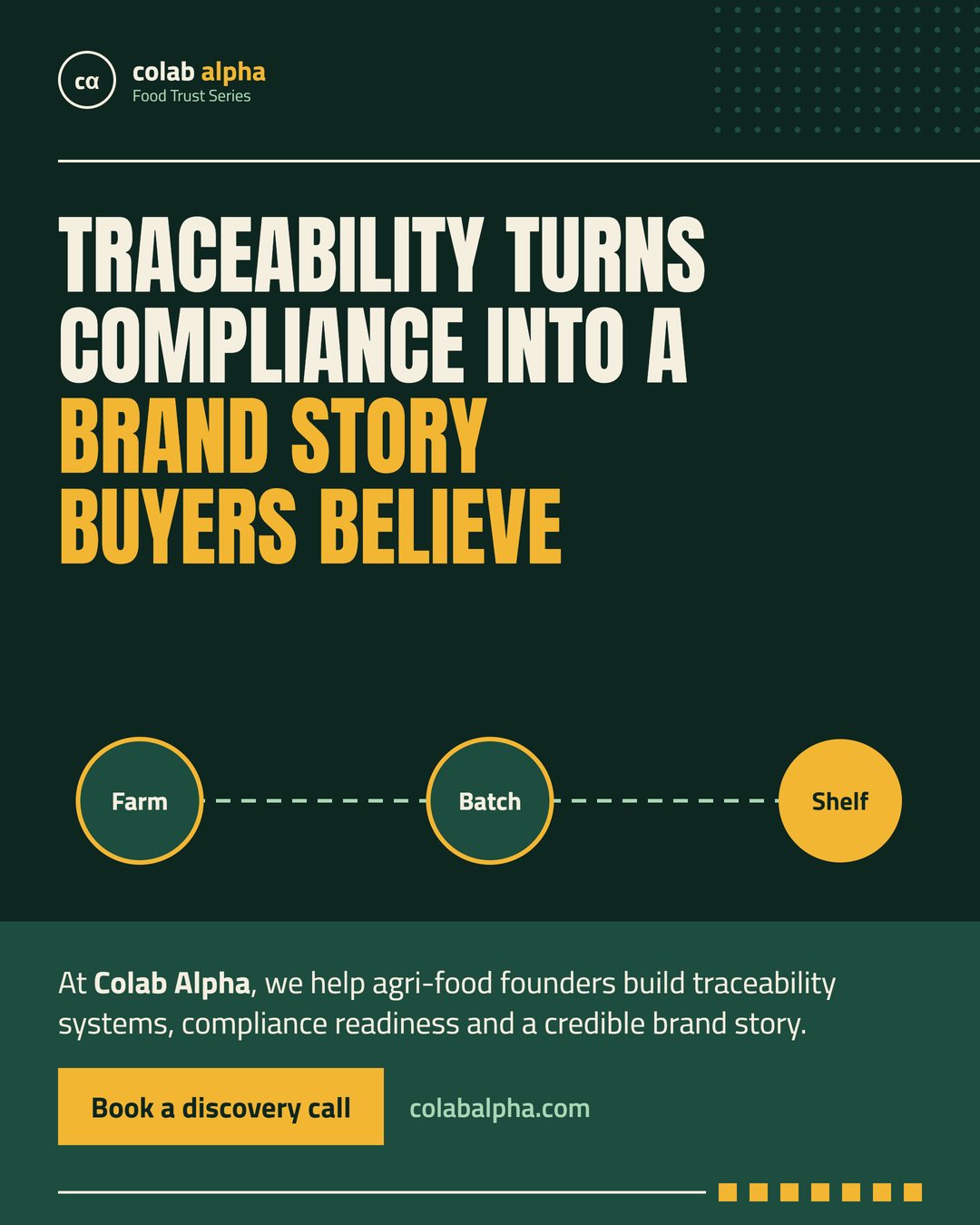
At Colab Alpha, I work with agri-food founders to build traceability systems, prepare for compliance and audits, and turn that proof into a brand story that buyers, retailers and investors believe. For a real example, see how we built a product and artisan digital passport for a forest-to-doorstep food brand.
Ready to make your brand’s claims provable?
Book a discovery call and tell me what you’re building.
Book a Discovery Call →