16 September 2026
How Tribalveda Won at the BRICS Solutions Award 2026 — An Award It Wasn’t Even Looking For
Most founders lose awards they never applied for — not because their work isn’t good enough, but because no one told them the opportunity existed, and turning real on-the-ground impact into a jury-ready submission is its own skill.
This is the story of how that changed for one enterprise.
The carousel, as shared on LinkedIn
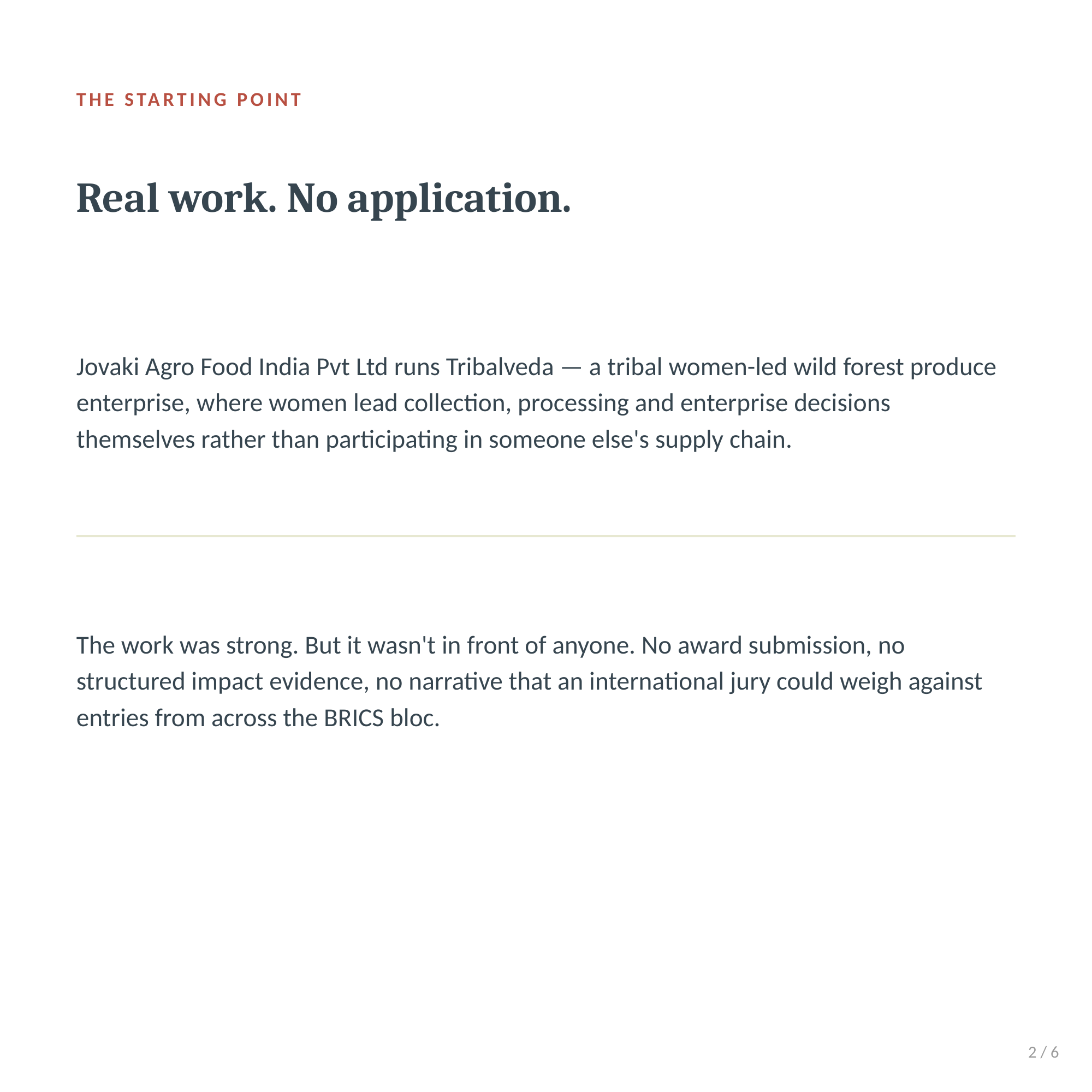
Swipe or scroll to see all 6 slides.
The starting point: real work, no application
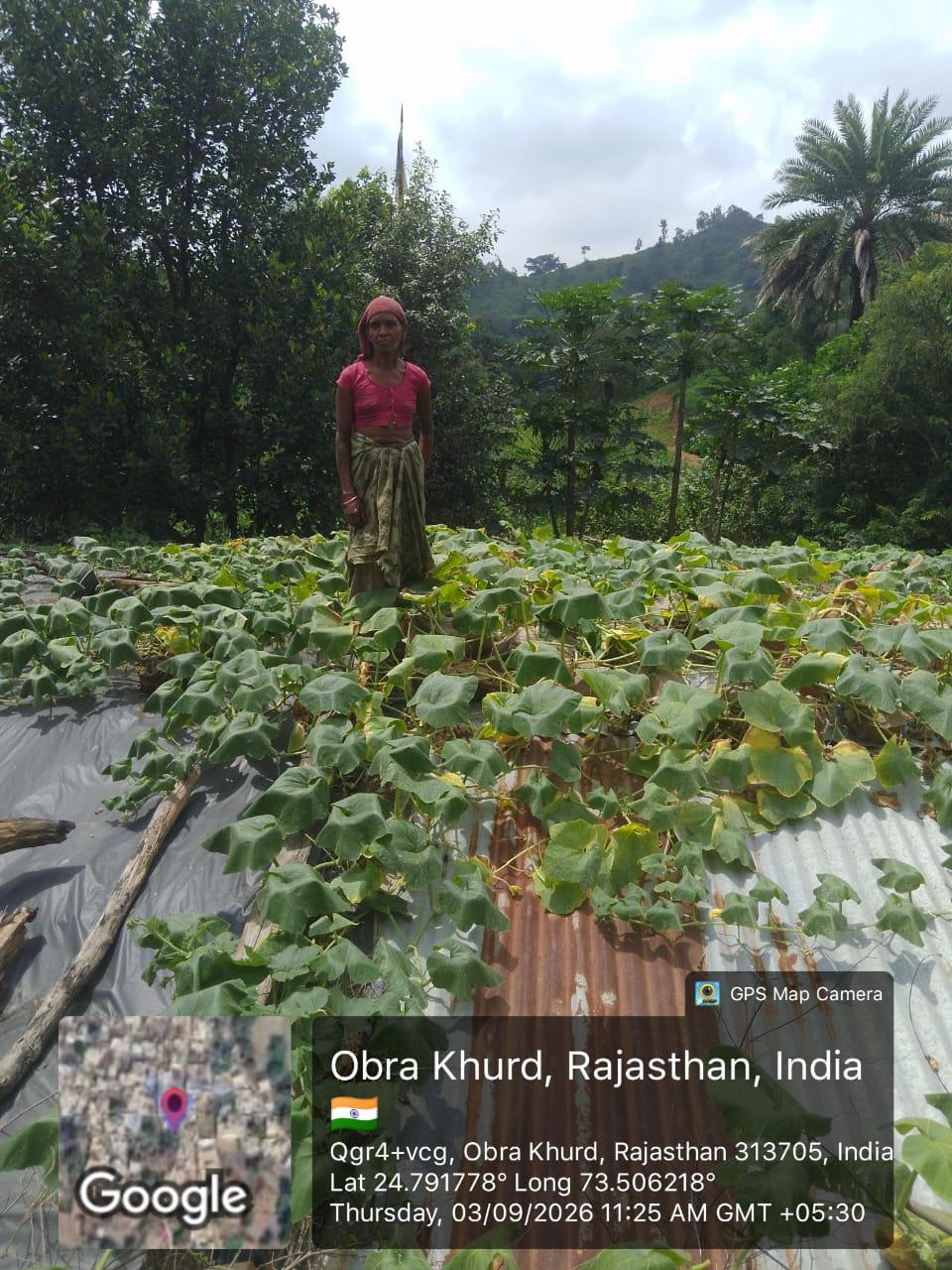
Jovaki Agro Food India Pvt Ltd runs Tribalveda — a tribal women-led wild forest produce enterprise. Not women participating in someone else’s supply chain. Women running collection, processing and enterprise decisions themselves, season after season, in some of the hardest operating conditions in the country.
The work was already strong. What it lacked wasn’t substance — it was a stage.
There was no award submission in motion. No structured impact evidence sitting ready to go. No narrative built for the specific lens an international jury would be judging against. Just good work, happening quietly, the way most good work does.
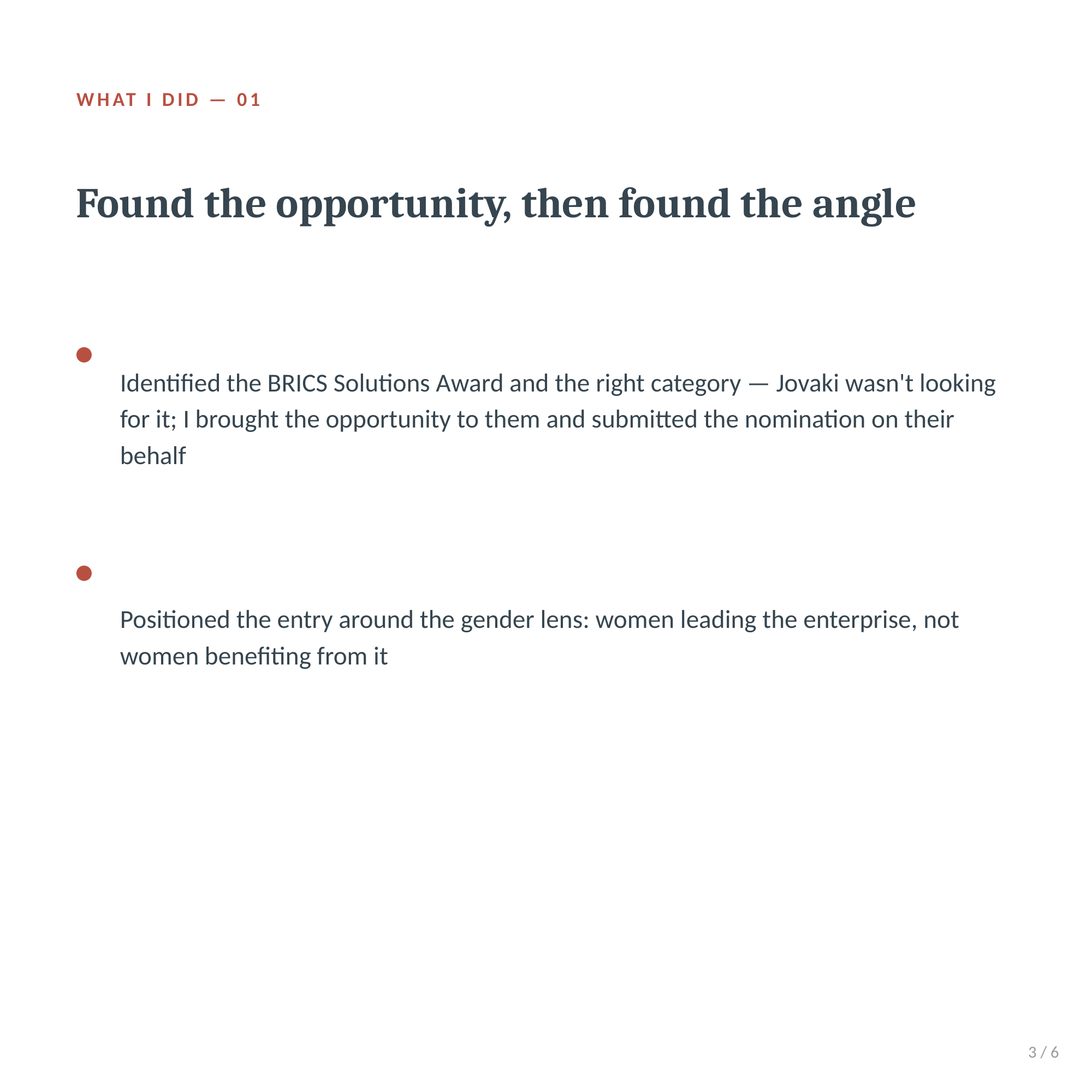
What I did: found the opportunity, then found the angle
I identified the BRICS Solutions Award 2026 and the right category for Tribalveda’s story to compete in — Jovaki wasn’t looking for this award when I brought it to them. I submitted the nomination on their behalf.
Then came the harder part: positioning. It would have been easy to submit Tribalveda’s story as a livelihoods program — women as beneficiaries of a good initiative. That’s not what the data showed, and it’s not what the jury’s category was actually asking for. So I positioned the entry around a sharper, truer angle: women leading the enterprise, not women benefiting from it. That distinction is the difference between a submission that reads as charity and one that reads as leadership.
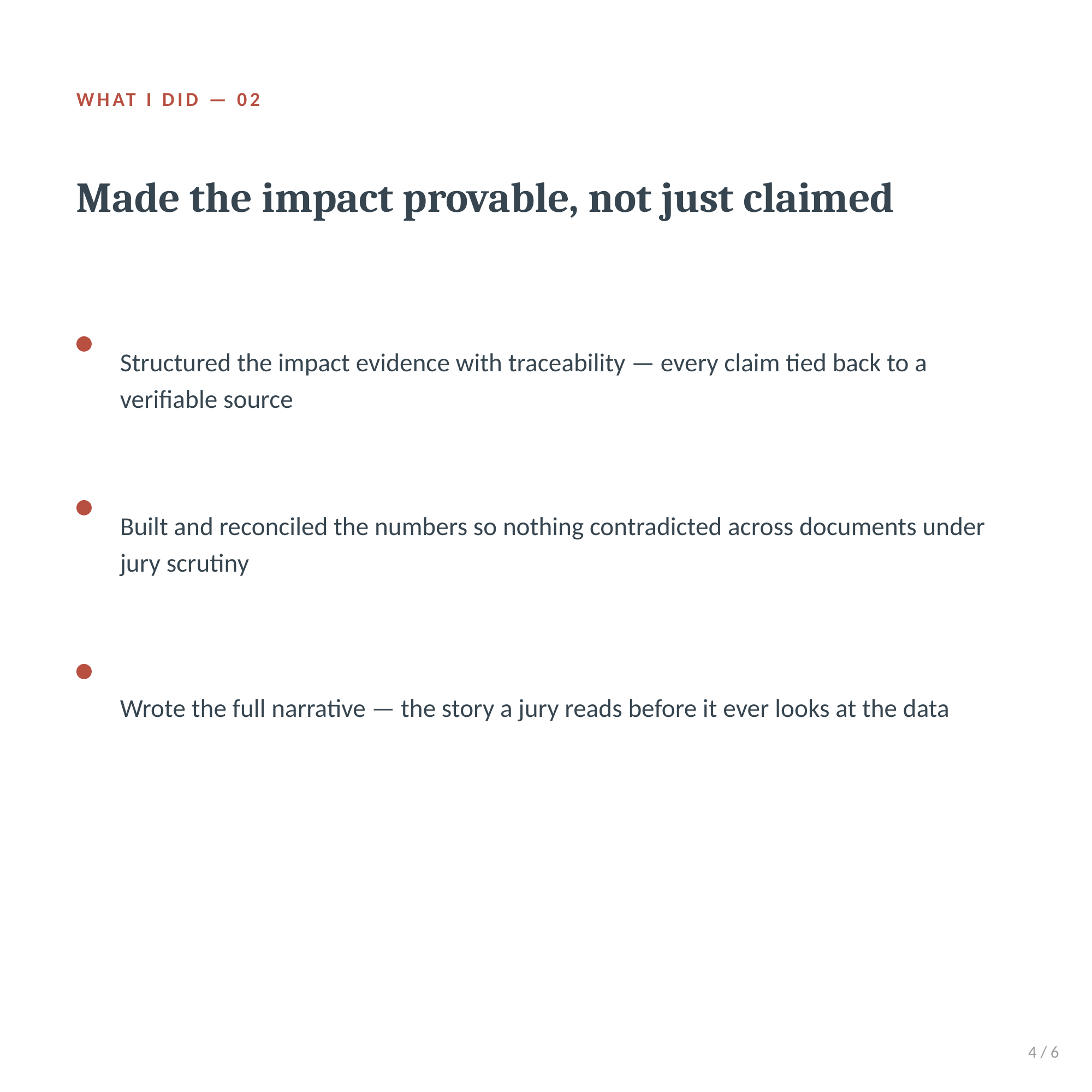
Making the impact provable, not just claimed
A strong story with weak evidence doesn’t survive a jury round. So the next stage of the work was structural, not narrative:
- Structured the impact evidence with full traceability — every claim in the submission tied back to a verifiable source, not a rounded-up estimate.
- Built and reconciled the numbers across every document so nothing contradicted itself under scrutiny — juries cross-check, and inconsistent figures are one of the fastest ways a strong application quietly loses credibility.
- Wrote the full narrative myself — the story a jury actually reads before they ever look at a single data point, because by the time reviewers get to the numbers, they’ve usually already formed a judgment about whether they trust the story.
None of this replaces the real work Tribalveda has done for years. It just made that work legible to people who’d never seen it before.
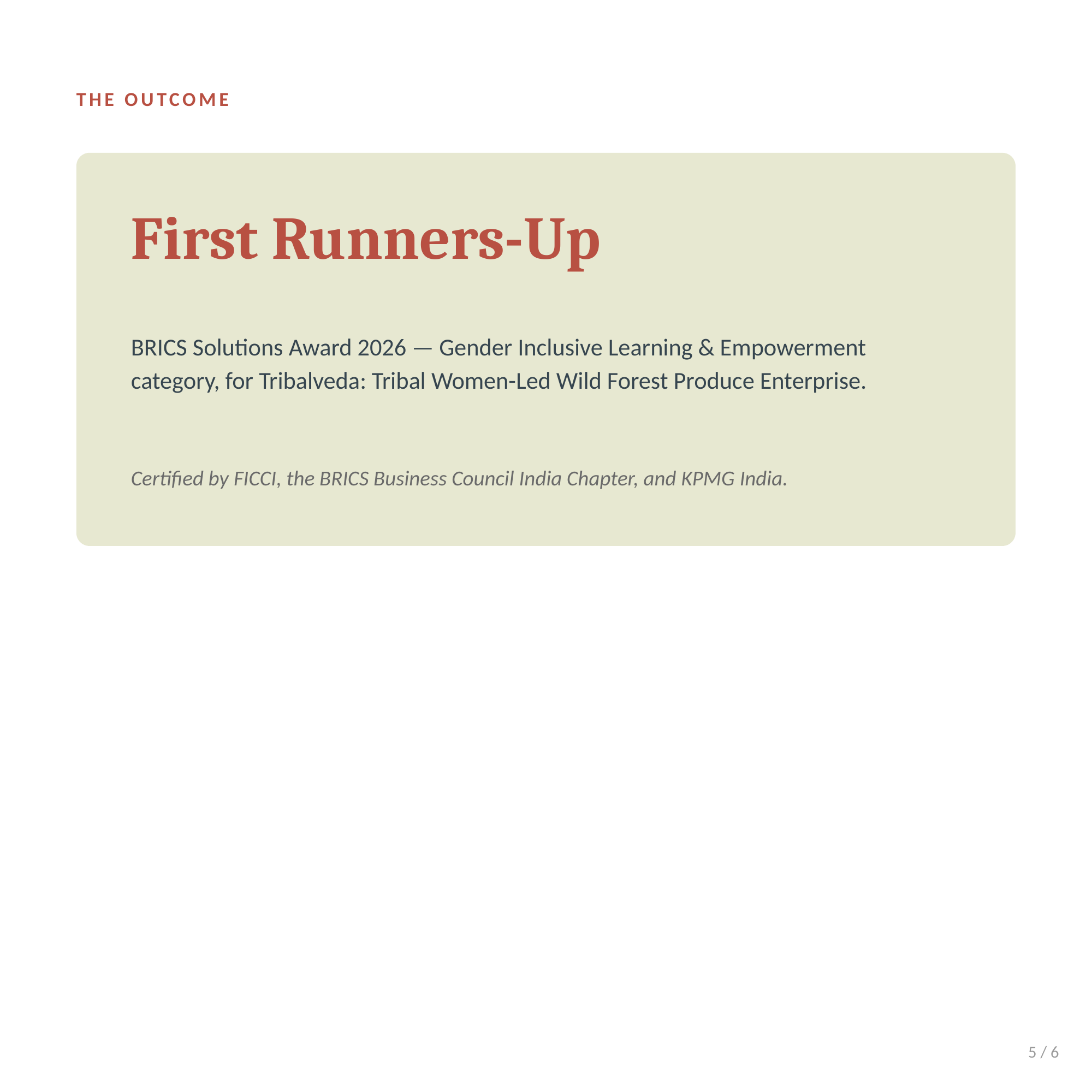
The outcome
Tribalveda placed First Runners-Up at the BRICS Solutions Award 2026, in the Gender Inclusive Learning & Empowerment category, for the project VanaShakti: Tribal Women-Led Wild Forest Produce Enterprise.
The award was certified by FICCI, the BRICS Business Council India Chapter, and KPMG India — judged against entries from across the BRICS bloc.
Why it matters
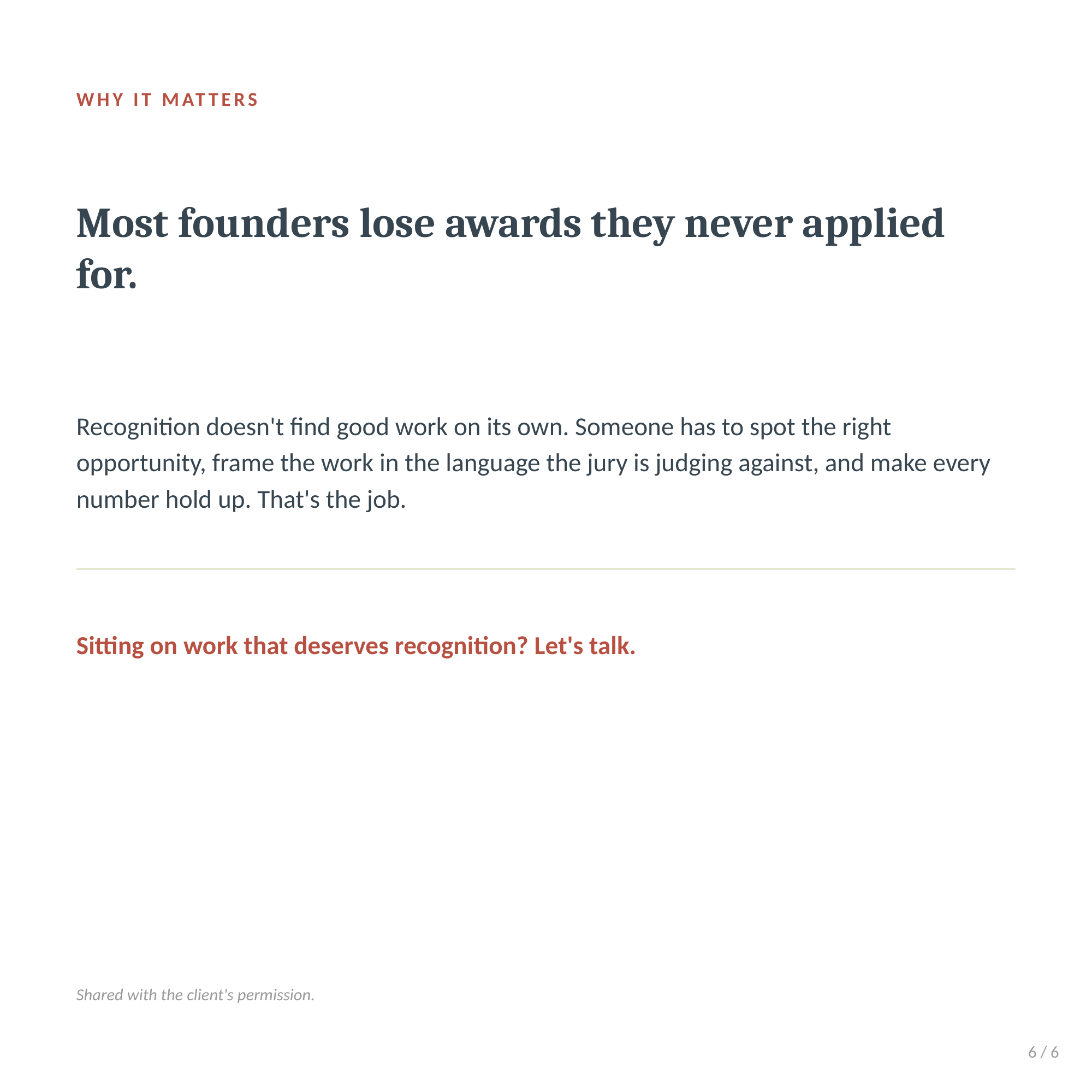
Recognition doesn’t find good work on its own. Someone has to spot the right opportunity, frame the work in the language the jury is actually judging against, and make every number hold up under scrutiny. That’s not a footnote to impact work — for founders buried in day-to-day operations, it’s often the missing piece between doing important work and being seen doing it.
If you’re building something real and haven’t yet found the stage that fits it, that’s usually not a sign the work isn’t ready. It’s a sign no one has structured it for the room it belongs in yet.
Sitting on work that deserves recognition — a grant, an accelerator, an award, or investor attention?
Shared with the client’s permission.
← Back to all posts